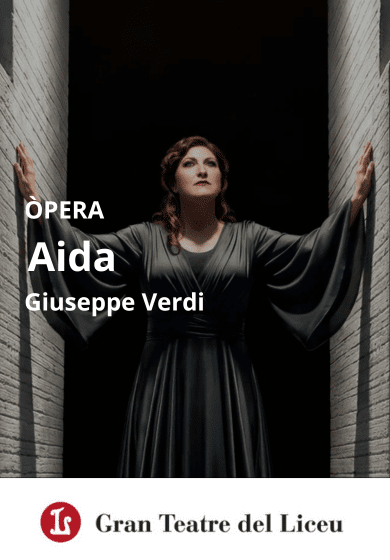
Aida

Gaudí in 4D

la-mundana-comedia-2023-06-11

Spanish Village of Barcelona

Toni Cano: Endorphin Trafficker
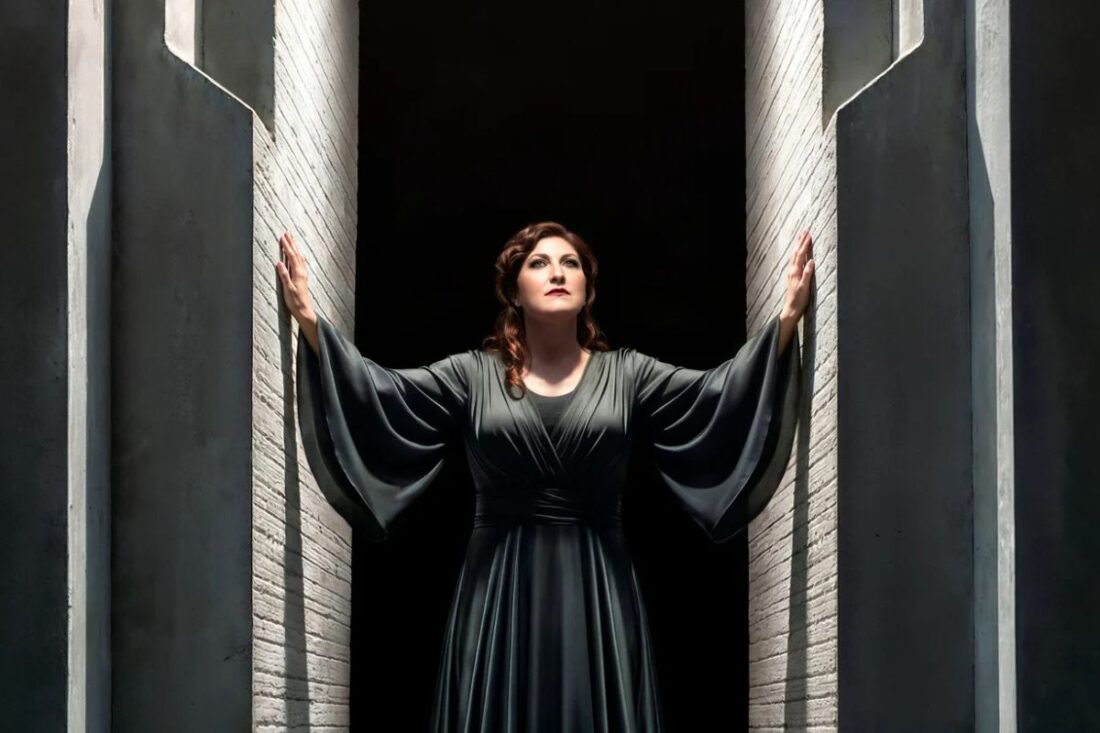
All information and the best tickets for the opera 'Aida' by Giuseppe Verdi at the Gran Teatre del Liceu in Barcelona, originating from the Salzburg Festival
The Liceu opens the season with an exceptional cast led by Anna Netrebko and Anna Pirozzi in the role of Aida, alongside Yusif Eyvazov and Piotr Beczała as Radamès. A luxurious opening to bring to life one of Verdi's most monumental operas, presented in an impactful production by Iranian artist Shirin Neshat, which transforms Aida into «a visual ritual where beauty and conflict constantly dialogue». This proposal, originating from the Salzburg Festival, avoids the usual grandiloquence and places the Verdi drama in a universe of great symbolic force. Neshat, with her poetic and committed gaze, transforms Aida into a narrative that dialogues with contemporary tensions: identity, exile, oppression, and the fragility of power. The opera thus becomes a mirror of the present, where aesthetics combine with a subtle but punchy political reading. Often interpreted as a love story in an idealized Egypt, Aida reveals a deeper conflict: the collision between the sacred and established power. Aida, an enslaved Ethiopian princess, and Radamès, an Egyptian hero, love each other in secret and challenge a system that condemns love as dissent. Their story, condemned from the start, brings to light a rigid structure where law and religion are confused to justify repression. Neshat's stage reading accentuates this tension with a visual beauty that does not renounce criticism. In the final tomb, Aida and Radamès find a last space of freedom: death becomes redemption, an emotional and spiritual release gesture that transcends the violence surrounding them. With the musical direction of Antonello Manacorda, and with Ekaterina Semenchuk and Ksenia Dudnikova as Amneris, as well as Artur Ruciński and Igor Golovatenko in the role of Amonasro, this Aida opens the Liceu season as a great total spectacle: emotion, reflection, and a visual force that invites the audience to experience the opera as a ritual and contemporary experience. This proposal, originating from the Salzburg Festival, avoids the usual grandiloquence and places the Verdi drama in a universe of great symbolic force. Neshat, with her poetic and committed gaze, transforms Aida into a narrative that dialogues with contemporary tensions: identity, exile, oppression, and the fragility of power. The opera thus becomes a mirror of the present, where aesthetics combine with a subtle but punchy political reading. Often interpreted as a love story in an idealized Egypt, Aida reveals a deeper conflict: the collision between the sacred and established power. Aida, an enslaved Ethiopian princess, and Radamès, an Egyptian hero, love each other in secret and challenge a system that condemns love as dissent. Their story, condemned from the start, brings to light a rigid structure where law and religion are confused to justify repression. Neshat's stage reading accentuates this tension with a visual beauty that does not renounce criticism. In the final tomb, Aida and Radamès find a last space of freedom: death becomes redemption, an emotional and spiritual release gesture that transcends the violence surrounding them. With the musical direction of Antonello Manacorda, and with Ekaterina Semenchuk and Ksenia Dudnikova as Amneris, as well as Artur Ruciński and Igor Golovatenko in the role of Amonasro, this Aida opens the Liceu season as a great total spectacle: emotion, reflection, and a visual force that invites the audience to experience the opera as a ritual and contemporary experience. This proposal, originating from the Salzburg Festival, avoids the usual grandiloquence and places the Verdi drama in a universe of great symbolic force. Neshat, with her poetic and committed gaze, transforms Aida into a narrative that dialogues with contemporary tensions: identity, exile, oppression, and the fragility of power. The opera thus becomes a mirror of the present, where aesthetics combine with a subtle but punchy political reading. Often interpreted as a love story in an idealized Egypt, Aida reveals a deeper conflict: the collision between the sacred and established power. Aida, an enslaved Ethiopian princess, and Radamès, an Egyptian hero, love each other in secret and challenge a system that condemns love as dissent. Their story, condemned from the start, brings to light a rigid structure where law and religion are confused to justify repression. Neshat's stage reading accentuates this tension with a visual beauty that does not renounce criticism. In the final tomb, Aida and Radamès find a last space of freedom: death becomes redemption, an emotional and spiritual release gesture that transcends the violence surrounding them. With the musical direction of Antonello Manacorda, and with Ekaterina Semenchuk and Ksenia Dudnikova as Amneris, as well as Artur Ruciński and Igor Golovatenko in the role of Amonasro, this Aida opens the Liceu season as a great total spectacle: emotion, reflection, and a visual force that invites the audience to experience the opera as a ritual and contemporary experience. This proposal, originating from the Salzburg Festival, avoids the usual grandiloquence and places the Verdi drama in a universe of great symbolic force. Neshat, with her poetic and committed gaze, transforms Aida into a narrative that dialogues with contemporary tensions: identity, exile, oppression, and the fragility of power. The opera thus becomes a mirror of the present, where aesthetics combine with a subtle but punchy political reading. Often interpreted as a love story in an idealized Egypt, Aida reveals a deeper conflict: the collision between the sacred and established power. Aida, an enslaved Ethiopian princess, and Radamès, an Egyptian hero, love each other in secret and challenge a system that condemns love as dissent. Their story, condemned from the start, brings to light a rigid structure where law and religion are confused to justify repression. Neshat's stage reading accentuates this tension with a visual beauty that does not renounce criticism. In the final tomb, Aida and Radamès find a last space of freedom: death becomes redemption, an emotional and spiritual release gesture that transcends the violence surrounding them. With the musical direction of Antonello Manacorda, and with Ekaterina Semenchuk and Ksenia Dudnikova as Amneris, as well as Artur Ruciński and Igor Golovatenko in the role of Amonasro, this Aida opens the Liceu season as a great total spectacle: emotion, reflection, and a visual force that invites the audience to experience the opera as a ritual and contemporary experience.
Images






Aquest cap de setmana a Barcelona
Altres plans a prop, per completar la sortida.
 Concert
the-jazz-room-tribut-a-frank-sinatra-i-louis-armstrong-2026-10-10
Jamboree Barcelona Theatre
motel-dinsectes-2026-10-10
Barcelona
un-somni-pirata-2026-10-10
Sala Xavier Fàbregas
la-truita-2026-10-10
Teatre Poliorama Theatre
laltra-matilda-2026-10-10
Teatreneusvetlana-oraculo-teatral-experiencia-interactiva-2026-10-10
Cafe Teatre Tinta RojaMés Theatre a Barcelona
Gaudí in 4D
la-mundana-comedia-2023-06-11
Spanish Village of Barcelona
Toni Cano: Endorphin Trafficker

Olfactory bingo

You've had enough of my story.